The Best Foods to Keep in Your Kitchen for the Eat. Feel. Believe. Lifestyle
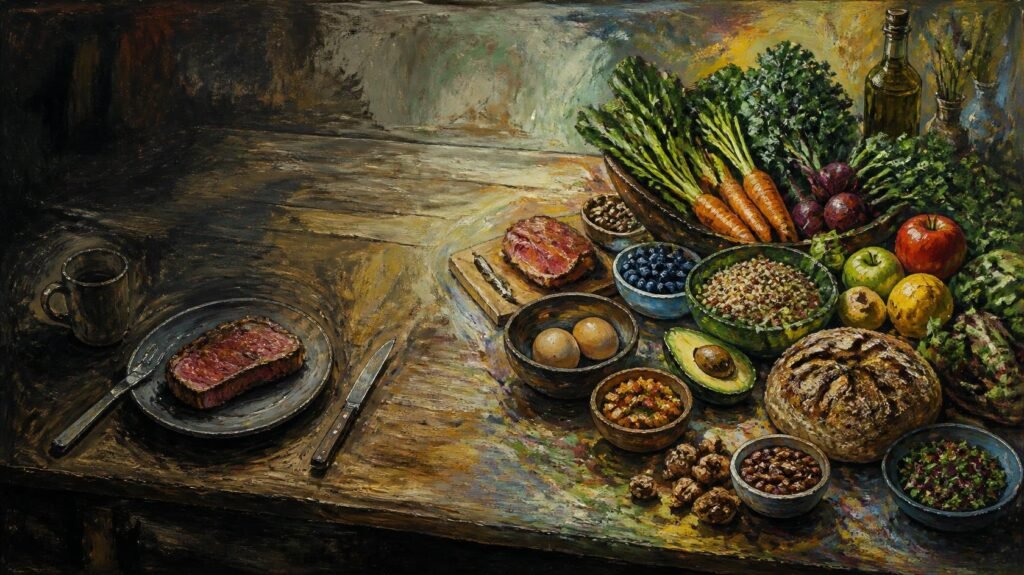
What you keep in your kitchen matters.
Not because your refrigerator is going to magically make you healthier.
Not because one particular food is going to transform your life.
But because your environment influences your choices.
When you’re hungry, tired, stressed, or busy, you’re more likely to reach for whatever is easiest.
If your kitchen is filled with highly processed foods, those foods are going to be convenient.
If your kitchen is filled with simple, nourishing ingredients, eating well becomes much easier.
That’s why I like to think about the kitchen as the starting point of the Eat. Feel. Believe. lifestyle.
EAT — nourish the body.
FEEL — balance the mind.
BELIEVE — nourish the spirit.
It starts with food, but it doesn’t end there.
The Kitchen Should Make Life Easier
I’ve learned that healthy eating doesn’t need to be complicated.
During my strict carnivore years, one of the things I loved most was simplicity.
Meat.
Eggs.
Salt.
Water.
There wasn’t much to think about.
Now that I’m experimenting with a broader whole-food approach, my kitchen has more variety.
But I’m not interested in turning it into a supermarket.
I still want simple food.
I still want meals I can prepare without spending an hour in the kitchen.
I still want ingredients I recognize.
The goal is not to have the perfect pantry.
The goal is to make good choices easier.
1. Keep Good Protein in the Refrigerator
Protein remains one of the foundations of my approach.
My refrigerator or freezer usually needs some kind of substantial protein available.
Consider:
- Ground beef
- Steak
- Chicken
- Turkey
- Pork
- Lamb
- Fish
- Eggs
You don’t need every option.
Pick the foods you enjoy and can afford.
Ground beef is especially practical.
You can cook a large batch and use it for several meals.
That’s exactly the kind of simplicity I like.
2. Eggs Are the Ultimate Backup Food
If you only keep one quick protein in the refrigerator, eggs are hard to beat.
They’re easy to cook.
They’re versatile.
They work for breakfast, lunch, or dinner.
And they can turn a nearly empty refrigerator into a meal.
Eggs plus ground beef?
Done.
Eggs plus vegetables?
Done.
Eggs plus avocado?
Done.
Sometimes the best kitchen strategy isn’t fancy.
It’s having something reliable available when you’re hungry.
3. Keep Some Fruit Around
This is one of the biggest changes in the new Carnivore Daddy food experiment.
Fruit is back in the kitchen.
Not because I’m suddenly convinced everyone needs unlimited fruit.
I’m simply experimenting with whole foods beyond meat.
Good choices include:
- Apples
- Berries
- Oranges
- Bananas
- Pears
- Peaches
- Kiwi
- Melons
You don’t need all of them.
Buy the fruit you actually enjoy.
And if fresh fruit tends to spoil before you eat it, frozen fruit can be a practical option.
4. Keep Frozen Vegetables Available
Fresh vegetables are great.
But frozen vegetables can be incredibly useful.
They don’t require you to cook them immediately.
They can stay in the freezer.
And they can turn a simple protein meal into something more varied.
Consider:
- Broccoli
- Cauliflower
- Green beans
- Spinach
- Mixed vegetables
- Brussels sprouts
You don’t have to eat vegetables because somebody told you that you must.
If you’re experimenting with them, pay attention to how you feel and what you enjoy.
5. Potatoes Can Make a Simple Meal
Depending on your personal approach to carbohydrates, potatoes can be useful.
They’re simple.
They’re inexpensive.
And there are countless ways to prepare them.
Try:
- Baked potatoes
- Roasted potatoes
- Boiled potatoes
- Mashed potatoes
If you’re following a very low-carbohydrate approach, potatoes may not fit your plan.
That’s okay.
The Eat. Feel. Believe. lifestyle isn’t about creating another rigid food religion.
It’s about building a pattern that works for you.
6. Keep Avocados Around
Avocados are another easy whole-food option.
They’re particularly useful because you don’t need much preparation.
Slice one.
Add salt.
Put it next to your eggs.
Add it to a beef bowl.
Put it beside fish.
Done.
Simple food doesn’t have to be boring.
7. Have Butter or Another Cooking Fat
A basic kitchen needs something for cooking.
Depending on your preferences, that might be:
- Butter
- Ghee
- Extra-virgin olive oil
- Avocado oil
- Beef tallow
You don’t need ten different bottles.
Choose what works for your cooking style.
And remember that cooking fats are calorie-dense, so “healthy” doesn’t mean unlimited.
8. Keep Salt and Simple Seasonings
Salt.
Black pepper.
Garlic.
Paprika.
Cinnamon.
Rosemary.
Oregano.
These basic seasonings can make simple foods much more enjoyable.
You don’t need a spice cabinet containing 47 bottles.
Start with the flavors you actually use.
9. Plain Yogurt Can Be Useful
If you tolerate dairy, plain Greek yogurt or another unsweetened yogurt can be a convenient option.
You can combine it with:
- Berries
- Fruit
- Cinnamon
- Nuts
Or eat it by itself.
The important word here is plain.
Many flavored yogurt products can contain substantial amounts of added sugar.
Read the label.
10. Keep Some Cheese If It Works for You
Cheese can be convenient and satisfying.
Options include:
- Cheddar
- Mozzarella
- Parmesan
- Swiss
- Cottage cheese
Again, individual tolerance matters.
Some people do well with dairy.
Others don’t.
The goal isn’t to force a particular food into your diet because it appears on a list.
11. Nuts and Seeds
A small supply of nuts can be useful.
Consider:
- Walnuts
- Almonds
- Pecans
- Macadamias
- Pistachios
- Pumpkin seeds
But there’s a catch.
Nuts are incredibly easy to eat without noticing how much you’ve consumed.
A small handful can become several handfuls while watching television.
If you’re trying to manage your food intake, portion awareness helps.
12. Keep Canned Fish in the Pantry
This is one of my favorite emergency foods.
Canned:
- Sardines
- Tuna
- Salmon
- Mackerel
can sit in the pantry until you need them.
You don’t need to cook.
You don’t need to defrost anything.
Open the can.
Add it to a simple meal.
Done.
A good kitchen needs backup options.
13. Don’t Forget Frozen Meat
Your freezer is your friend.
Buying meat in larger quantities can make meal planning easier.
Keep a few options frozen:
- Ground beef
- Steaks
- Chicken
- Fish
- Burgers
Then you always have something available.
The freezer can protect you from the classic:
“There’s nothing to eat, so let’s order something.”
14. Keep Water Easy to Access
This sounds almost too obvious.
But it’s worth saying.
Keep water available.
Make drinking water convenient.
You don’t need a collection of expensive beverages to stay hydrated.
Sometimes the healthiest kitchen habit is also the simplest.
15. What About Snacks?
Here’s where I would be careful.
If you’re constantly hungry between meals, first ask why.
Are your meals satisfying?
Are you eating enough?
Are you bored?
Are you stressed?
Are you simply accustomed to eating every couple of hours?
Instead of filling the kitchen with packaged snack foods, keep a few simple options available.
Fruit.
Hard-boiled eggs.
Plain yogurt.
Cheese.
A small portion of nuts.
Leftover meat.
Simple foods.
Your Refrigerator Should Tell a Story
Open your refrigerator.
What do you see?
If it’s mostly sauces, drinks, desserts, and packaged snacks, that’s going to influence you.
If you see:
Eggs.
Meat.
Fruit.
Vegetables.
Yogurt.
Cheese.
Leftovers.
That’s a different environment.
Your kitchen doesn’t have to be perfect.
It simply needs to support the person you’re trying to become.
The Pantry Matters Too
A simple pantry might contain:
- Canned fish
- Salt
- Pepper
- Spices
- Olive oil
- Vinegar
- Nuts
- Canned tomatoes
- Potatoes or other whole-food staples
- Simple broth or stock
Again, don’t buy food just because it sounds healthy.
Buy food you will actually eat.
Don’t Buy Food You Don’t Want to Eat
Here’s a simple rule:
Don’t bring your biggest temptation into the house and then blame yourself for eating it.
Willpower is useful.
But environment is powerful.
If you know that you can’t stop eating a particular snack once you open the package, maybe don’t keep five packages in the pantry.
You don’t need to prove your willpower to a bag of chips.
Just don’t buy the chips.
The Kitchen Is Part of Mental Health
This is where EAT starts connecting with FEEL.
Your environment can influence your mental state.
A chaotic kitchen can make cooking feel like work.
A clean kitchen can make preparing food easier.
A refrigerator with simple ingredients can reduce decision fatigue.
And fewer decisions can mean less stress.
That’s why I don’t think healthy eating is only about nutrition.
It’s also about designing an environment that makes life easier.
Don’t Make Food Your Full-Time Job
There’s another trap.
You can become so interested in healthy eating that you spend your entire day thinking about food.
Meal planning.
Macros.
Supplements.
Recipes.
Ingredients.
Food timing.
Food rules.
Food arguments.
At some point, you have to ask:
Is this helping me live, or am I living to manage food?
Food should support your life.
It shouldn’t consume your life.
The Eat. Feel. Believe. Kitchen
I like to imagine the ideal Carnivore Daddy kitchen as having three purposes.
EAT
The kitchen provides simple, nourishing foods.
Protein.
Whole foods.
Water.
Basic ingredients.
FEEL
The kitchen reduces stress.
Meals are simple.
Choices aren’t endless.
The environment is organized.
Food isn’t used as the only way to cope with emotions.
BELIEVE
The kitchen can even become a place for gratitude.
Before eating, pause.
Be grateful for the food.
Be grateful that you’re alive.
Be grateful for the people who helped put that food on your table.
You don’t need a complicated ritual.
Sometimes ten seconds of gratitude is enough.
Build Meals, Not Rules
One of the biggest changes in my thinking is moving away from endless rules.
Instead of asking:
“Can I eat this?”
Ask:
“How does this fit into my overall way of eating?”
A steak can fit.
Eggs can fit.
Fruit can fit.
Vegetables can fit.
A potato can fit.
Maybe something else fits too.
The goal is the overall pattern.
Not one ingredient.
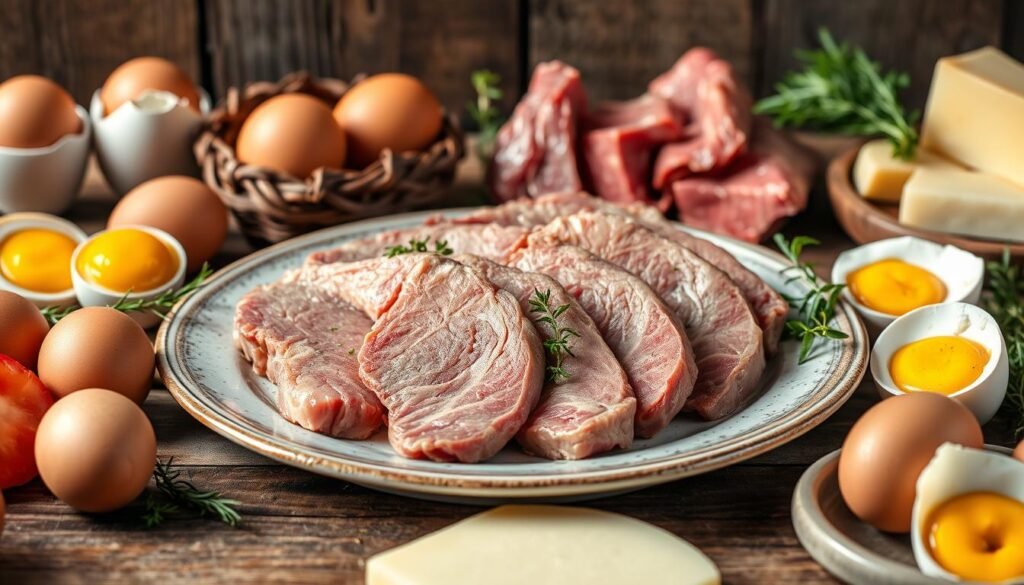
A Simple Carnivore Daddy Kitchen List
If you wanted to start from scratch, here’s a practical list.
Refrigerator
- Eggs
- Ground beef
- Steak or another meat
- Chicken
- Fish
- Butter
- Plain Greek yogurt
- Cheese
- Fruit
- Avocados
- Fresh vegetables
Freezer
- Ground beef
- Chicken
- Fish
- Frozen berries
- Frozen vegetables
Pantry
- Canned tuna or sardines
- Olive oil or preferred cooking fat
- Salt
- Black pepper
- Basic herbs and spices
- Nuts
- Potatoes or other whole-food staples
Always Available
- Water
That’s enough to build a surprising number of simple meals.
Your Emergency Meal Plan
Every kitchen should have a “I’m tired and don’t want to cook” option.
Mine might look something like:
Ground beef + eggs.
Or:
Steak + frozen vegetables.
Or:
Canned fish + avocado.
Or:
Greek yogurt + berries.
The exact meal doesn’t matter.
The principle does.
Make the healthy choice the easy choice.
What You Don’t Need
You don’t need:
- A $500 blender
- A refrigerator full of supplements
- Twenty protein powders
- A cabinet full of exotic ingredients
- Expensive superfoods
- Complicated meal-prep systems
- A perfect kitchen
You need food.
Simple food.
Food you enjoy.
Food that fits your goals.
The Kitchen Is Not a Test of Perfection
You will eat something processed sometimes.
You will order takeout.
You will eat at a restaurant.
You will have a dessert.
Life happens.
Don’t turn one meal into a moral failure.
The goal is the pattern.
If your kitchen generally supports the way you want to eat, you’re already ahead.
The Bigger Point
The Eat. Feel. Believe. lifestyle isn’t another rigid diet.
It’s a way of thinking about the whole human being.
Start with the body.
Feed it real food.
Then pay attention to the mind.
Protect your emotional energy.
And then go deeper.
Ask what you believe.
Ask what gives your life meaning.
Ask what kind of person you want to become.
Food is the beginning.
Not the destination.
Your Kitchen Can Become Your Foundation
A good kitchen doesn’t need to look impressive.
It needs to be useful.
It should contain food that makes it easier to nourish yourself.
It should reduce unnecessary decisions.
It should make cooking simple.
It should help you avoid relying on highly processed convenience foods every day.
And ideally, it should remind you that taking care of yourself doesn’t have to be complicated.
So keep the steak.
Keep the eggs.
Keep the fruit.
Experiment with vegetables.
Keep some simple backup foods in the freezer.
Drink water.
Season your food.
And then close the refrigerator door.
Go for a walk.
Call somebody you love.
Spend some time in silence.
Pray.
Think.
Live.
Because the kitchen can nourish your body.
But the goal of the Eat. Feel. Believe. lifestyle is much bigger than what’s in the refrigerator.
EAT. FEEL. BELIEVE.
Nourish the body.
Balance the mind.
Nourish the spirit.
And build a kitchen that helps you live the life you actually want.