7 Kitchen Tools Every Carnivore Actually Uses (And a Few You Can Skip)

My kitchen used to look like a gadget museum.
Spiralizer. Bread maker. Air popper. A blender with seven speeds I never used. Somewhere in the back of a cabinet, a waffle iron shaped like a cartoon character.
When I went carnivore, I cleaned house.
And I realized something almost funny: I needed fewer tools to eat better than I ever had.
Carnivore cooking is simple. Meat, heat, salt. But the right handful of tools makes it faster, easier, and a lot more delicious.
Here are the seven I actually use — every single week.
1. A Cast Iron Skillet
If you only buy one thing, buy this.
Cast iron holds heat like nothing else, which means a real crust on your steak instead of a sad gray one. It goes from stovetop to oven. And if you take care of it, it’ll outlive you — my grandmother’s skillet is proof.
Tip: A 12-inch skillet fits two steaks or a full pound of ground beef without crowding.
2. An Instant-Read Meat Thermometer
This one changed my cooking more than anything else.
No more cutting into steaks to “check.” No more guessing on pork or chicken. A good instant-read thermometer tells you exactly when meat is done — and helps you hit food-safe temperatures every time.
Cheap insurance against overcooked steak and undercooked chicken.

- Versatile Cooking Skillet: The Lodge Cast Iron Skillet is a multipurpose, everyday cooking pan that excels at searing, s…
- Pre-Seasoned & PFAS-Free: This pre-seasoned skillet is made with 100% natural vegetable oil for a naturally nonstick fin…
- Superior Heat Distribution: The heavy-duty cast iron frying pan cooks evenly, making it ideal for precision recipes and …
3. A Sharp Chef’s Knife
A dull knife is dangerous. It slips. It crushes meat instead of slicing it.
One good chef’s knife — kept sharp — handles nearly everything: trimming roasts, slicing steak against the grain, cutting pork belly into bites.
Add a simple honing rod, and you’re set for years.
4. A Big Cutting Board
Raw meat needs room.
I use a large, heavy board just for meat, and I wash it well with hot, soapy water after every use. A board with a juice groove keeps your counter clean when you’re resting a roast.
Food safety reminder: keep raw meat away from anything that won’t be cooked.
5. A Sheet Pan and Wire Rack
My secret weapon for bacon.
Lay strips on a rack over a sheet pan, put it in the oven, and walk away. Flat, crispy, evenly cooked bacon — and the fat collects in the pan below.
Which brings me to the next tool.
6. A Fat-Saving Jar
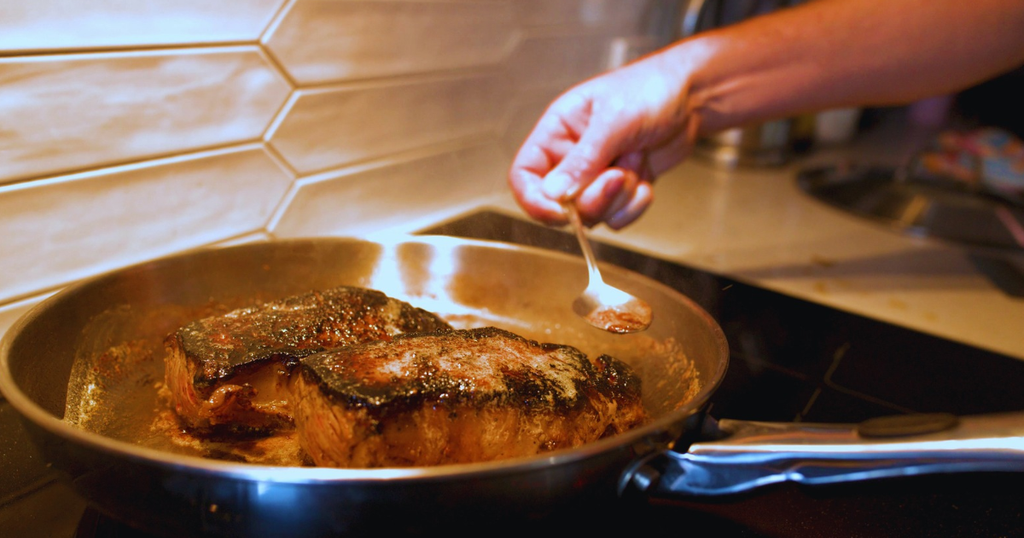
On carnivore, bacon grease isn’t trash. It’s gold.
Strain cooled drippings into a glass jar and keep it in the fridge. Use it to fry eggs, sear burgers, or brown ground beef. Same goes for tallow from roasts.
Free cooking fat. Big flavor. Zero waste.
7. A Slow Cooker or Pressure Cooker
Busy week? This is how you still eat well.
Throw in a chuck roast, short ribs or a pork shoulder with salt and a little water in the morning. Come home to dinner that falls apart with a fork.
Pressure cookers do the same thing in about an hour. Either one makes cheap, tough cuts tender — which is great for your grocery budget.
Bonus: A Good Pair of Tongs
Okay, technically that makes eight.
Long, sturdy tongs let you flip steaks without piercing them, turn bacon without getting splattered, and pull roasts out of a hot slow cooker safely. Spring-loaded ones with a locking clip store easily in a drawer.
They cost almost nothing, and you’ll reach for them every single day.
How to Care for Your Cast Iron
Since it’s tool number one, it deserves a minute of care.
After cooking: rinse with hot water while it’s still warm and scrub with a brush or chain-mail scrubber. A little mild soap is fine.
Dry completely: put it back on low heat for a minute so every drop of water disappears.
Oil lightly: wipe a thin layer of tallow or bacon fat inside before storing.
Avoid soaking it. Standing water causes rust.
Do that, and your skillet will get better every time you cook in it.
The Tools You Can Skip
Honestly? Most of the kitchen gadget aisle.
Fancy blenders. You’re not making smoothies anymore.
Spiralizers. Goodbye, zucchini noodles.
Bread machines and toasters. Self-explanatory.
Single-use egg gadgets. A pan and a spatula cook eggs just fine.
Meal-prep apps with macro tracking. Helpful for some people, but most beginners do better learning their hunger cues first.
You’ll free up cabinet space — and probably some money.
Where to Spend and Where to Save
Spend on: the thermometer and the knife. A cheap thermometer that reads slowly or incorrectly defeats the purpose, and a quality knife stays sharp far longer.
Save on: the skillet, cutting board, and sheet pans. Basic cast iron is inexpensive and works as well as premium brands once it’s seasoned.
Skip entirely: anything sold as a “carnivore gadget.” Meat has been cooked over fire for thousands of years. You don’t need a special device for it.
What I’d Buy First on a Budget
If you’re starting from scratch and want to keep it simple:
- Cast iron skillet
- Instant-read thermometer
- One sharp chef’s knife
That’s it. Those three will cook 90% of your carnivore meals well.
Everything else can wait.
Simple Tools, Better Meals
Carnivore isn’t about fancy recipes. It’s about good meat cooked well.
The right tools make that easy. The wrong ones just collect dust.
My kitchen counters are almost empty now.
My plates are full.
That’s a trade I’d make again.
Disclaimers
Medical Disclaimer: This article is for informational purposes only and is not medical advice. Talk with your healthcare provider before making major changes to your diet, especially if you have a medical condition, take medication, or are pregnant or nursing.
Carnivore Diet Disclaimer: The carnivore diet is a restrictive way of eating and is not right for everyone. Individual results and experiences vary.
Food Safety Disclaimer: Handle, store, and cook meat and eggs according to food safety guidelines, including recommended internal temperatures: 160°F (71°C) for ground meat and eggs, 165°F (74°C) for poultry.
Affiliate Disclosure: This post may contain affiliate links. As an Amazon Associate, Carnivore Daddy earns from qualifying purchases, at no extra cost to you.