Is There More to Life Than What We Can See?

We spend most of our lives looking at what is directly in front of us.
We see our homes.
Our families.
Our jobs.
Our bodies.
Our bank accounts.
Our phones.
Our food.
Our problems.
We can measure our weight.
We can measure our blood pressure.
We can count calories.
We can track steps.
We can take pictures.
We can record almost everything.
But then there is a strange question that refuses to go away:
Is there more to life than what we can see?
I think there is.
I don’t pretend to have every answer.
But the older I get, the harder it becomes for me to believe that the physical world is the entire story.
The World We Can See Is Only a Small Part of Reality
Think about how much exists that we cannot see with our eyes.
We can’t see radio waves.
We can’t see Wi-Fi signals.
We can’t see gravity.
We can’t see most of the air surrounding us.
We can’t see many forms of radiation.
We can’t see thoughts.
We can’t see memories.
We can’t see love.
Yet we know these things can have real effects.
Our inability to see something doesn’t automatically mean it doesn’t exist.
That is an important distinction.
Invisible does not mean imaginary.
We Live in a World of Invisible Things
Consider something as ordinary as your phone.
You can see the device.
You can touch the screen.
But the information traveling through it is not visible to you.
A message can travel thousands of miles without you watching it move through the air.
You don’t see the signal.
You see the result.
That idea makes me wonder about other invisible realities.
What if consciousness is more complicated than we understand?
What if spiritual experience is pointing toward something real?
What if there are dimensions of reality that human senses simply aren’t equipped to detect?
These aren’t questions we should answer carelessly.
But they’re questions worth asking.
Your Eyes Are Not the Ultimate Authority
Human vision is impressive.
But it has limits.
Our eyes detect only a small portion of the electromagnetic spectrum.
There are sounds we cannot hear.
There are microscopic organisms we cannot see without instruments.
There are distances our senses cannot accurately judge.
Things are happening around us right now that we are completely unaware of.
Technology has repeatedly expanded our understanding of reality.
The microscope showed us worlds too small for our eyes.
The telescope revealed worlds too distant for our vision.
Scientific instruments continue to reveal things human senses alone could never detect.
So why should we assume that everything real must be immediately visible?
But This Doesn’t Mean We Should Believe Everything
Here’s where I think we need balance.
Saying that invisible things can exist does not mean every supernatural claim is true.
We should remain curious without becoming gullible.
That’s an important difference.
There are people who will tell you they have discovered hidden truths about the universe.
Some may have meaningful experiences.
Others may simply be selling something.
Curiosity needs discernment.
Faith doesn’t require abandoning common sense.
And spirituality shouldn’t require believing every strange story you encounter online.
The Mystery of Consciousness
One of the biggest mysteries is sitting inside your own head.
You are conscious.
You experience the world.
You have memories.
You have thoughts.
You experience love, fear, sadness, joy, and wonder.
But what exactly is consciousness?
We can observe the brain.
We can study electrical activity.
We can examine different brain regions.
We can learn more about how the nervous system works.
But the personal experience of being you remains one of the deepest mysteries of existence.
You don’t simply process information.
You experience it.
You have an inner world.
And that inner world raises enormous questions.
Who Is the Person Behind Your Eyes?
Here’s a strange thought.
Look in a mirror.
You see your face.
But the person looking through those eyes is experiencing something you can’t photograph.
Your memories aren’t visible.
Your thoughts aren’t visible.
Your hopes aren’t visible.
Your fears aren’t visible.
Your inner dialogue isn’t visible.
There is an entire universe inside every person you meet.
We see the outside.
We rarely see the whole person.
Maybe that’s one reason compassion matters so much.
Everyone is carrying an invisible story.
Love Is Invisible but Powerful
Consider love.
You can’t put love on a kitchen scale.
You can’t photograph it directly.
You can’t measure it with a ruler.
Yet love can change someone’s entire life.
A parent’s love can shape a child.
A friendship can rescue someone from loneliness.
A simple act of kindness can remain in someone’s memory for decades.
Love isn’t visible in the same way a steak is visible.
But that doesn’t make it less real.
In some ways, it may be more important.
What About God?
This is where the question becomes personal.
For me, the idea of God cannot be reduced to something that should be visible like a physical object.
If God exists, God isn’t simply another thing sitting somewhere in the universe waiting to be photographed.
That changes the question.
Instead of asking:
“Can I see God?”
Perhaps we should also ask:
“What evidence of the divine do I recognize in my experience of life?”
That might include creation.
Consciousness.
Love.
Moral awareness.
Beauty.
Meaning.
Prayer.
Personal experience.
None of these automatically proves a particular religious belief.
But together, they can lead a person toward deeper questions.
Faith Begins Where Certainty Ends
I think this is one of the most interesting things about faith.
If everything were visible and measurable, faith wouldn’t really be faith.
Faith exists partly because we don’t have complete certainty.
That doesn’t mean faith should be blind.
It means we are willing to trust something we cannot completely prove through our physical senses.
People do this in ordinary life too.
You trust someone you love.
You trust that tomorrow will come.
You trust that a friend means what they say.
You trust that your memories are generally accurate.
Human life requires some degree of trust.
The spiritual question is where we place that trust.
Why Do We Want Everything Explained?
Modern culture has become extremely good at explaining things.
That’s wonderful.
Science has given us extraordinary knowledge.
Medicine has saved and improved countless lives.
Technology has transformed civilization.
But there is a danger in assuming that because we can explain many things, we can explain everything.
There are still enormous mysteries.
Why does anything exist?
Why is consciousness possible?
Why do humans experience beauty?
Why do we have a sense of right and wrong?
Why do we search for meaning?
Why do we love?
Why do we fear death?
These questions don’t disappear because technology gets better.
In some ways, better knowledge makes the mystery even more interesting.
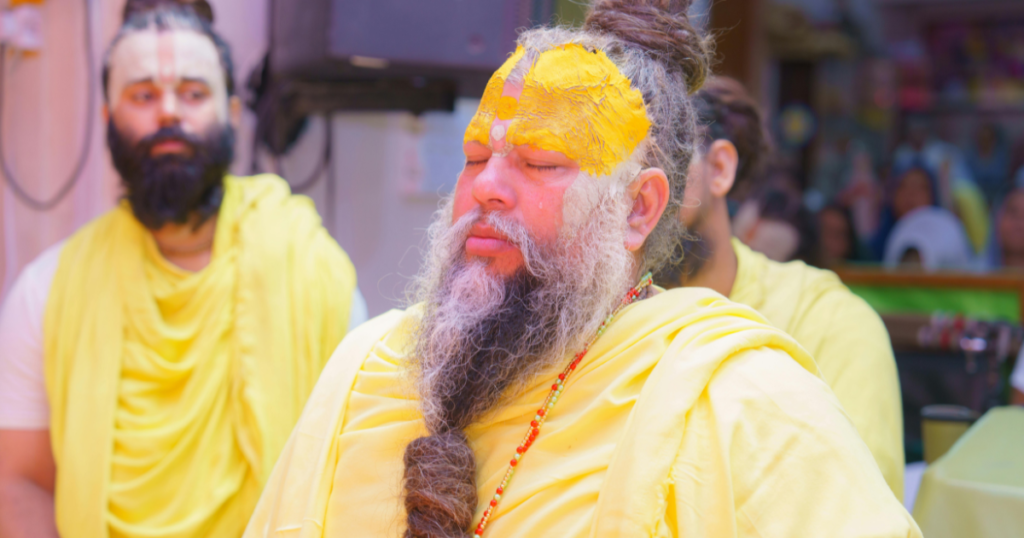
The Fear of Death
Eventually, this question leads somewhere uncomfortable.
Death.
Almost every human being eventually has to confront it.
We can avoid thinking about it.
We can stay busy.
We can focus on fitness.
We can focus on money.
We can focus on entertainment.
We can focus on food.
But eventually, the question remains:
What happens when this body stops?
Nobody living today has complete firsthand knowledge of what happens after death.
Religions offer different answers.
Philosophers offer different ideas.
Science continues studying consciousness and the human brain.
But uncertainty remains.
And perhaps that’s why spiritual questions become more important as we get older.
Getting Older Changes the Questions
When you’re young, you may be focused primarily on building.
Build a career.
Build a family.
Build a home.
Build financial security.
Build a body.
Build a reputation.
But eventually, you start thinking differently.
How much time do I have?
What really matters?
What will I leave behind?
Who have I helped?
Who have I hurt?
What do I believe?
Have I lived well?
These questions aren’t signs of weakness.
They’re signs that you’re paying attention.
The Body Is Temporary
This is something I’ve thought about more as I’ve become older.
We spend enormous amounts of time taking care of the body.
And we should.
The body matters.
Food matters.
Exercise matters.
Sleep matters.
Strength matters.
Independence matters.
But the body changes.
Hair turns gray.
Muscles change.
Skin changes.
Joints change.
Our appearance changes.
Eventually, the body reaches the end of its journey.
So what about everything else?
What happens to your love?
Your memories?
Your influence?
Your beliefs?
Your spiritual life?
Your connection with other people?
Those questions go beyond nutrition.
This Is Why BELIEVE Matters
This is the deeper meaning behind the third pillar of CarnivoreDaddy.com:
BELIEVE — Nourish the Spirit.
I don’t think spirituality should be an afterthought.
You don’t have to belong to a particular denomination to ask spiritual questions.
You don’t have to pretend you have absolute certainty.
You can simply begin with curiosity.
What do I believe?
Why do I believe it?
What gives my life meaning?
Do I believe in God?
What does prayer mean to me?
What do I think happens after death?
What kind of person do I want to become?
These are some of the biggest questions a human being can ask.
You Don’t Have to Have All the Answers
This is important.
You don’t need to solve the mystery of existence before breakfast.
You don’t need a perfect theology.
You don’t need to understand everything.
Sometimes the most honest answer is:
“I don’t know.”
There’s tremendous freedom in those three words.
“I don’t know” can become the beginning of curiosity.
It can lead to reading.
Prayer.
Meditation.
Conversation.
Study.
Silence.
Reflection.
And perhaps eventually, faith.
Sit With the Mystery
Try something simple.
Tonight, turn off your phone.
Turn off the television.
Sit somewhere quiet.
Look at the night sky.
Think about the fact that you are alive.
You didn’t choose to be born.
Yet here you are.
You have a body.
You have consciousness.
You can think about your own existence.
You can love.
You can wonder.
You can ask questions about God.
That’s extraordinary.
We become so accustomed to being alive that we forget how strange existence actually is.
You Are More Than Your Diet
This brings us back to Carnivore Daddy.
I started with food.
I learned about carnivore.
I experimented with my diet.
I learned about real food.
Now I’m asking bigger questions.
Because I don’t want to spend my entire life debating whether one food is better than another while ignoring the mystery of being alive.
Food matters.
But so does meaning.
Your body matters.
But so does your mind.
Your mind matters.
But so does your spirit.
That’s why the three pillars belong together:
EAT.
Nourish the body.
FEEL.
Balance the mind.
BELIEVE.
Nourish the spirit.
Maybe There Is More
So, is there more to life than what we can see?
I don’t think we should be afraid of saying:
Maybe.
Maybe there is more.
Maybe consciousness is deeper than we understand.
Maybe love points toward something beyond biology.
Maybe the universe is more mysterious than our current models suggest.
Maybe God is closer than we realize.
Maybe there is a spiritual reality that our physical senses cannot fully perceive.
Or maybe our understanding is simply incomplete.
Whatever the answer turns out to be, I think the question is worth keeping alive.

Don’t Let the Physical World Become Your Entire World
Take care of your body.
Eat real food.
Get stronger.
Walk.
Sleep.
Enjoy your life.
But don’t become so focused on the physical that you forget the invisible parts of being human.
Love someone.
Forgive someone.
Pray.
Be grateful.
Sit in silence.
Help another person.
Look at the stars.
Ask questions.
Stay curious.
There are things you cannot put on a scale that may matter more than anything you can.
The Bigger Carnivore Daddy Question
Maybe Carnivore Daddy started with:
“What should I eat?”
Then came:
“How do I feel?”
And now comes:
“What do I believe?”
That’s the journey.
The body gets our attention first.
The mind asks for the next conversation.
Then the spirit starts asking questions.
And perhaps that’s what growing older really means.
Not simply becoming older.
Becoming deeper.
Seeing beyond the obvious.
Understanding that life is bigger than what appears on the surface.
So keep eating real food.
Keep taking care of the body.
Keep protecting the mind.
But don’t be afraid to look beyond what your eyes can see.
Because maybe the most important things in life were never meant to be seen.
Maybe they were meant to be experienced, believed, and lived.
EAT. FEEL. BELIEVE.
And keep asking the bigger questions.
