The Holiday Prime Rib I Almost Ruined — A Carnivore Prime Rib Recipe for the Holidays
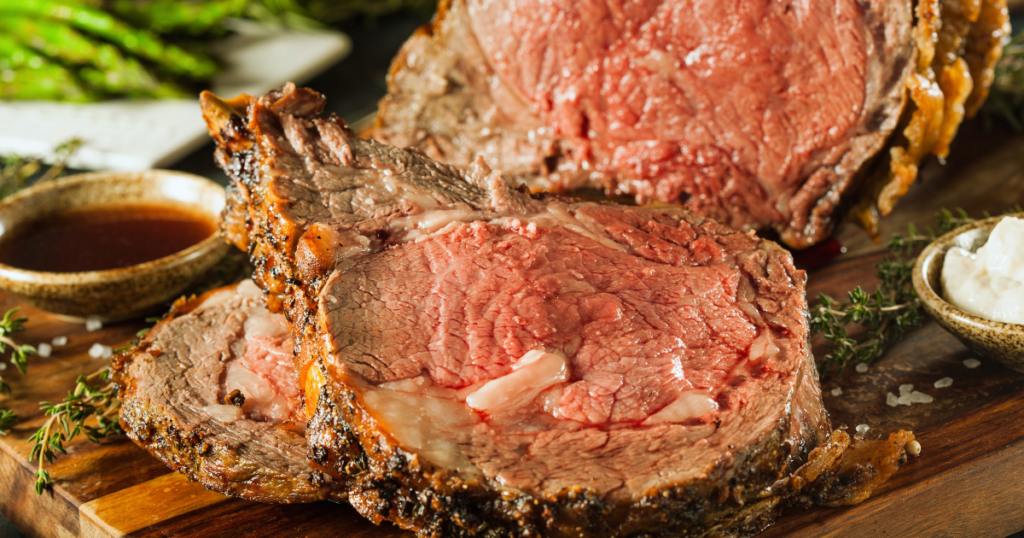
The first prime rib I ever bought cost more than my car payment.
I carried it home from the butcher like a newborn. Wrapped in paper. Heavy. Beautiful. Four bones of marbled beef that I had been thinking about for a week.
Then I followed a recipe from the back of a magazine. High heat. A timer. No thermometer.
I opened the oven, sliced it at the table in front of everyone, and watched a thick gray ring spread from the crust almost to the center. Only a small pink circle was left in the middle, like an apology.
Everyone said it was great.
It wasn’t great.
And I knew it.
The Roast Was Never the Problem
Here’s what I learned from that night.
Prime rib isn’t hard. It’s fragile. It’s a big, expensive cut that punishes rushing. Blast it with heat and the outside overcooks long before the inside catches up. That’s where the gray ring comes from.
Most of us were taught to cook a roast the way you’d cook a steak: hot and fast.
A prime rib wants the opposite.
It wants patience. Low heat. Time. A little faith.
When I went carnivore, the holiday table changed for me. There were no rolls to fill up on, no potatoes, no casseroles to hide behind. The meat was the meal. And if the meat is the meal, it deserves to be done right.
So I relearned prime rib from the ground up.
This is how I cook it now.
Why Prime Rib Is the Perfect Carnivore Holiday Roast
Prime rib, also called a standing rib roast, comes from the same part of the animal as the ribeye. Same rich marbling. Same deep beef flavor. Same generous fat cap.
It’s basically a giant ribeye, cooked whole.
On the carnivore diet, that fat is what you want. It carries flavor, it keeps you full, and it renders into the drippings you’ll use for au jus.
It also feeds a crowd with almost no work on the day itself. Once it’s in the oven, you mostly just wait.
How to Buy the Right Roast
This is where most of the success happens, before you ever turn on the oven.
How much to buy. Plan on one rib bone for every two people, or about ¾ to 1 pound per person bone-in. A 3-bone roast feeds about six. A 4-bone roast feeds eight, with leftovers.
Ask for the first cut. The “first cut” or “small end” comes from ribs 10 through 12, closer to the loin. It’s more tender and has a bigger center eye. The second cut from the chuck end has more fat and connective tissue, which some people love. Either one is great. Just know what you’re getting.
Bone-in beats boneless. The bones insulate the meat, help it cook more evenly, and add flavor. Ask your butcher to cut the bones off and tie them back on. You get all the benefits of bone-in, and carving becomes easy.
Grade. Prime grade has the most marbling. Choice is excellent and a lot easier on the wallet. Buy the best your budget allows and don’t stress. Good technique matters more than grade.
Order early. Butchers run out of rib roasts in December. Put your order in a week or two ahead.
What You’ll Need
Ingredients
- 1 bone-in prime rib roast, 3 to 4 bones (about 7 to 9 lbs)
- Coarse salt, about 1 teaspoon per pound (about half that if using fine salt)
- ½ cup (1 stick) salted butter, softened
- 2 tablespoons beef tallow, softened
- 2 cups beef bone broth, for the au jus
Tools
- A heavy roasting pan with a rack
- A leave-in probe meat thermometer
- An instant-read thermometer to double-check
- Butcher’s twine, if your butcher didn’t tie it
- A long, sharp carving knife
Step 1: Dry Brine With Salt (1 to 3 Days Ahead)
Unwrap the roast and pat it completely dry with paper towels.
Salt it evenly on every side: the fat cap, the ends, and between the bones and the meat if they’ve been cut and tied.
Set it on a rack over a tray and put it in the fridge uncovered for 1 to 3 days.
The salt pulls moisture out, dissolves into it, and then gets drawn back deep into the meat. It seasons the roast all the way through, not just the surface. The cold, dry fridge air also dries the outside, and a dry surface is what gives you a deep crust at the end.
The longer you give it, the better it gets. Even overnight makes a real difference.
Step 2: Let It Warm Up a Little
Take the roast out of the fridge about 2 hours before cooking.
It won’t come fully to room temperature, and it doesn’t need to. You just want to take the deep chill off so it cooks more evenly.
Mix the softened butter and tallow together and rub it all over the roast, especially the fat cap.
Don’t add more salt. The dry brine already did the job.
Step 3: Low and Slow (The Reverse Sear)
This is the method that saved my holidays.
Preheat your oven to 225°F to 250°F. Low. Lower than feels right.
Set the roast bone-side down on the rack in your roasting pan. The bones act as a natural rack and shield the bottom from heat.
Slide the probe thermometer into the very center of the thickest part, without touching bone.
Roast until the center reaches your pull temperature:
| Doneness | Pull from low oven at | After the sear and rest |
|---|---|---|
| Rare | 115°F | 120–125°F |
| Medium-rare | 120–125°F | 128–132°F |
| Medium | 130–135°F | 138–142°F |
At 225°F to 250°F, plan on roughly 30 to 40 minutes per pound, so about 4 to 5 hours for an 8-pound roast. That’s a rough guide only. Ovens vary, roasts vary, and the thermometer is the only thing you should trust.
Medium-rare is where prime rib shines. It’s the reason people order it.
Low heat cooks the roast so gently that the temperature from the crust to the center barely changes. That’s how you get edge-to-edge pink, with no gray ring.
Step 4: Rest Before the Sear
When it hits your pull temperature, take the roast out and tent it loosely with foil.
Let it rest 30 minutes to an hour. Because it cooked so slowly, it won’t climb much, and it stays hot for a long time.
This also gives you a window. If your guests are late, or the rest of dinner isn’t ready, the roast can wait.
Use this time to turn the oven all the way up to 500°F (or as high as it goes) and make the au jus.
Step 5: Sear It Hard
Once the oven is fully heated, put the roast back in, uncovered, for 6 to 10 minutes, until the outside is deep brown, sizzling, and crackling.
Watch it closely. You’re only building the crust, not cooking the inside.
That’s the magic of the reverse sear. Pink in the middle, crust on the outside, and almost no overcooked meat in between.
Step 6: Carnivore Au Jus (No Flour)
While the oven heats up for the sear, take the rack out of the roasting pan and pour off most of the clear fat, keeping a spoonful or two. Save the rest of that fat for cooking.
Set the pan over medium heat on the stove. Pour in the bone broth and scrape up every brown bit from the bottom. That’s where the flavor lives.
Simmer until it reduces by about a third, rich and dark. Taste it. Add a pinch of salt only if it needs it.
Pour any juices that collected under the resting roast into the pan too.
That’s it. Pure beef, reduced into something you’ll want to drink straight from the spoon.
Step 7: Carve It
If the bones were cut and tied, snip the twine and lift the whole roast off the bones in one piece. Set the rib bones aside. They’re the best part for whoever gets them.
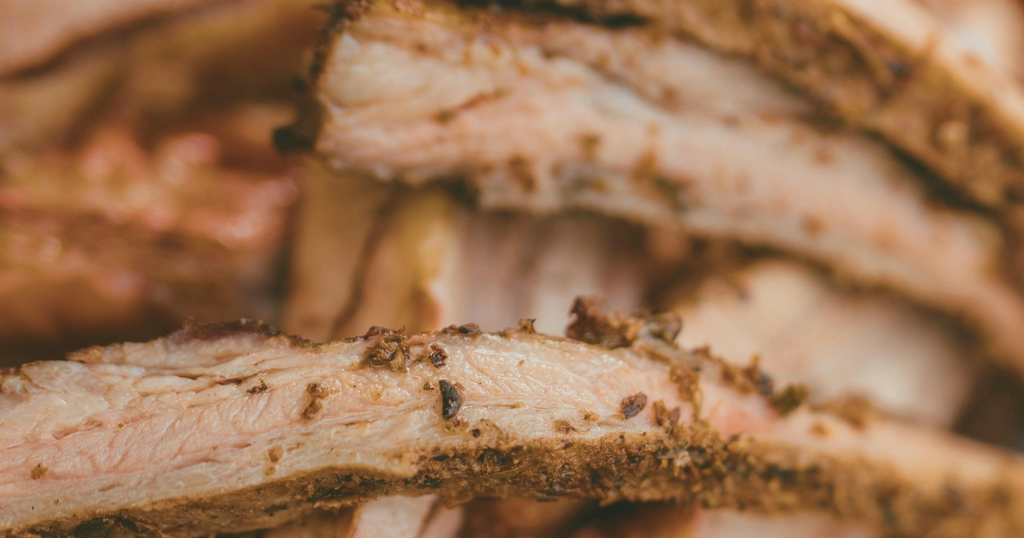
Slice the roast across the grain into slabs about ½ to 1 inch thick. Spoon a little au jus over each slice.
If you cooked it bone-in without cutting, run your knife along the curve of the bones to free the meat, then slice.
The Best Part: Leftovers
Cold prime rib is one of the best breakfasts on earth.
Slice it thin and eat it straight from the fridge. Or sear thick slices for about a minute per side in a hot cast iron skillet with butter, just enough to warm them.
Don’t microwave it. You’ll lose everything you worked for.
And save the bones. Roast them again, then simmer them into bone broth. Nothing gets wasted.
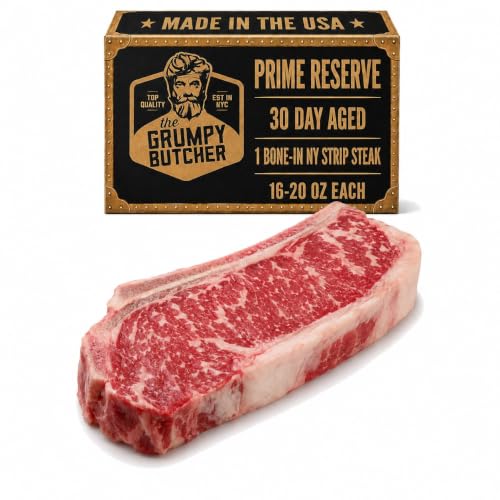
- Prime Reserve Bone-In NY Strip Steak: includes 1 USDA Prime Bone-In NY Strip Steak (16-20 oz), aged 30 days for rich fla…
- USDA Prime Beef: born and raised in Texas, selected for exceptional marbling, bold flavor, and the elevated quality expe…
- Aged 30 Days, Steakhouse-Portion Cut: aged to perfection for rich flavor and tenderness, then cut as a substantial bone-…
What the Prime Rib Taught Me About the Holidays
That first ruined roast taught me something that had nothing to do with beef.
I was rushing. I wanted it done. I wanted to impress people. I wanted the moment to be perfect, so I forced it, and I lost the very thing I was trying to create.
The holidays can feel exactly like that. Too many plans, too many people, too much pressure to make it all feel special.
The prime rib doesn’t care about any of it. It only asks for one thing.
Slow down.
Now, when I set that roast on the table, I take a moment before I carve. I give thanks for the animal. For the butcher. For the people sitting in front of me, and the ones who aren’t there anymore.
That’s the part I try to carry into the whole season. Low heat. Patience. Attention to what’s in front of you. The best things are the ones you stop forcing and let come to you.
Final Thoughts
Prime rib isn’t about fancy technique. It’s about restraint.
Salt it early. Cook it low. Trust the thermometer. Let it rest. Sear it hard at the end.
Then carve it slowly, in front of the people you love.
This is the one meal of the year worth waiting for.
Give it the time it deserves.
Disclaimers:
Affiliate Disclosure: As an Amazon Associate, I earn from qualifying purchases. Some links in this article may be affiliate links, which means I may earn a small commission at no extra cost to you if you make a purchase. I only recommend products I believe are genuinely useful for the carnivore lifestyle.
Medical Disclaimer: This article is based on my personal experience and is for informational purposes only. It is not medical advice. The carnivore diet is not right for everyone. Please consult your doctor or a qualified healthcare provider before making significant changes to your diet, especially if you have a medical condition or take medication.
Food Safety Disclaimer: The USDA recommends cooking whole cuts of beef to an internal temperature of 145°F, followed by a 3-minute rest. The rare and medium-rare temperatures in this article are lower than USDA guidance and are a personal preference. Pregnant women, young children, older adults, and anyone with a weakened immune system should cook beef to the USDA-recommended temperature. Refrigerate leftovers within two hours of cooking.